Animals of Langkawi
A guide to the wildlife you may encounter across the island.
This Langkawi wildlife guide covers animals in Langkawi, monkeys, hornbills, eagles, birds, monitor lizards, the Sunda colugo, giant squirrels and other wildlife - with practical notes on where to see them and how to watch responsibly.
B E S T P L A C E S
Where to look
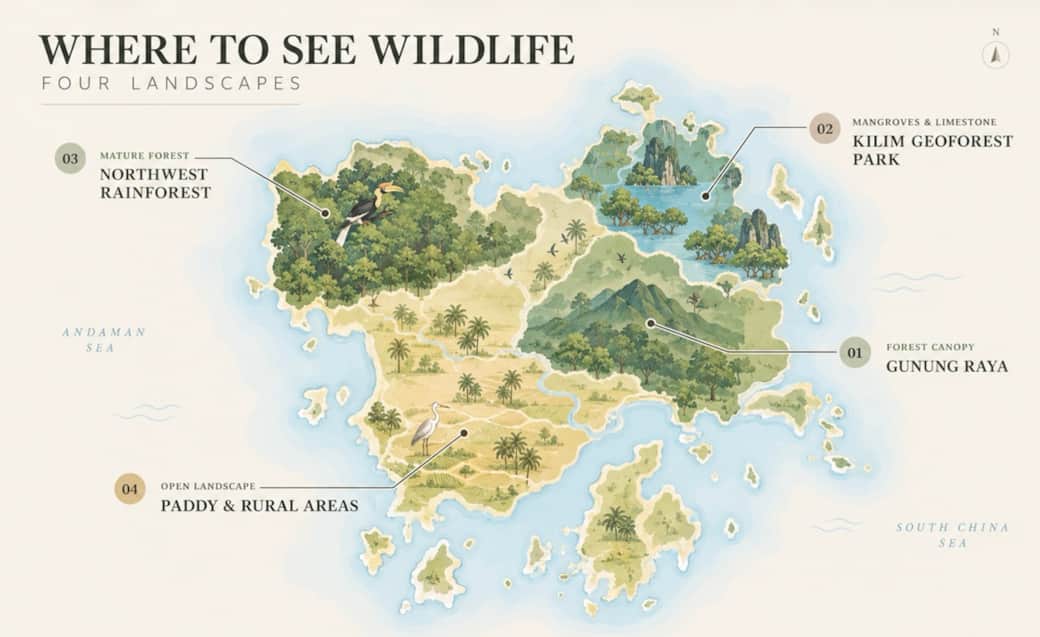
Gunung Raya, Kilim Geoforest Park, the northwest rainforest, paddy fields and quieter rural areas.
C O M M O N S I G H T I N G S
What you may see
Macaques, eagles, dusky leaf monkeys, hornbills, monitor lizards, geckos and rural birdlife.
B E S T T I M E
When wildlife is active
Early morning and late afternoon are especially rewarding for birdlife and forest activity.
G O L D E N R U L E
Observe, never invite
Keep a respectful distance, do not feed wildlife, and allow animals to move naturally.

Wildlife between rainforest and sea
Langkawi’s wildlife is part of everyday island life. Eagles circle above the mangroves, dusky leaf monkeys move quietly through the trees, hornbills cross the forest canopy, and monitor lizards appear beside rivers and wetlands. This guide introduces some of the animals you may encounter, where you are most likely to see them, and how to observe them with care.
CONTENT
01. Forest & Canopy - Quiet Movement Above the Road
02. Birdlife of Langkawi - Look Up
03. Mangrove & Wetlands - Where land and water meet
04. Open Landscape - Animals around Island Life
05. How to watch wildlife responsibly - A little distance changes everything
06. Four Landscapes - Let the habitat guide you
07. Frequently Asked Questions
01. FOREST & CANOPY
Quiet Movement Above the Road
Some of Langkawi's most memorable wildlife is found above eye level. Forested edges, mature tree and quieter roads around the island can reveal primates, gliding mammals and large squirrels - often only for a few seconds.

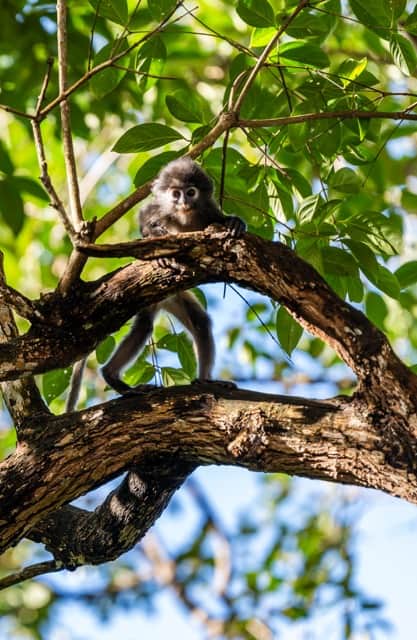
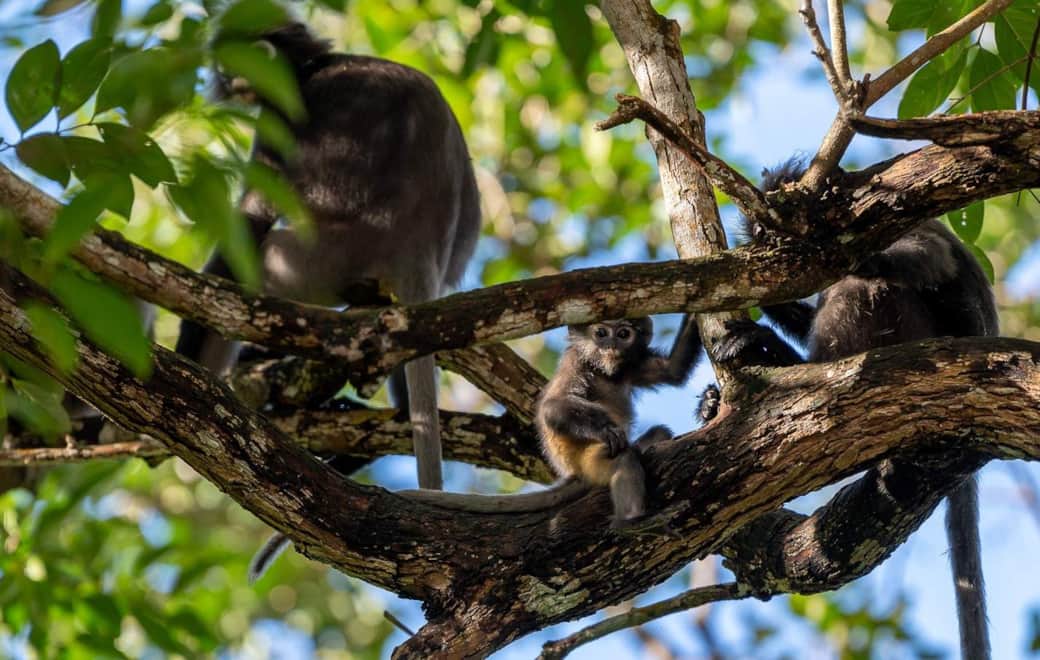
Dusky Leaf Monkey
Recognizable by pale rings around the eyes and a gentle, watchful expression. Babies are born bright orange before gradually developing the darker adult coat.

WHERE TO SEE
Dusky leaf monkeys are often found in quieter parts of the forest like near Gunung Raya or Kilim Karst Geoforest Park as they are quite shy around people. They tend to stay high up in the trees, traveling in small family groups.
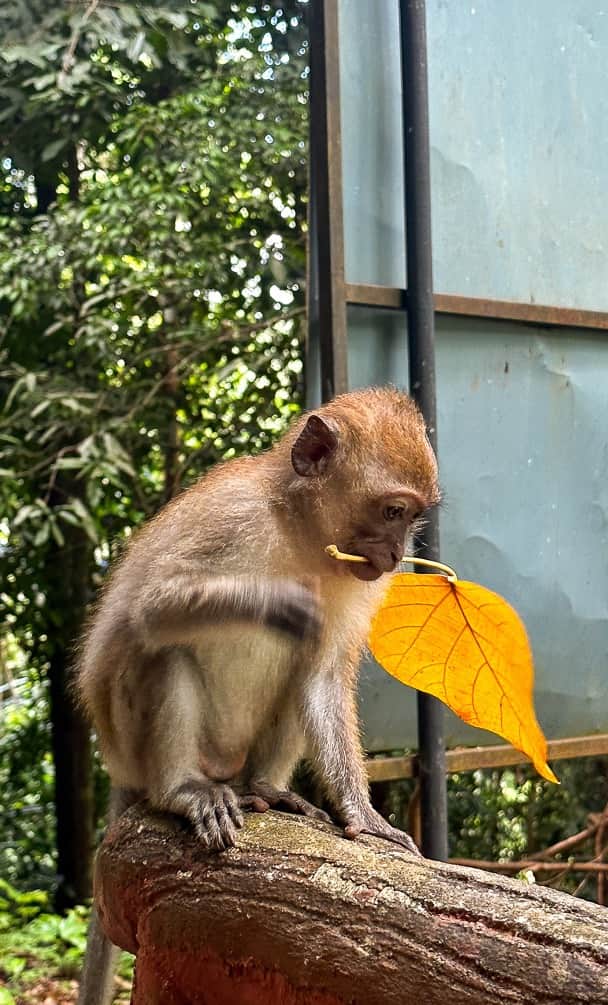
Long-Tailed Macaques
Common around forest roads and popular visitor areas. They are intelligent and opportunistic, especially around food, so bags and snacks should be kept secured.
WHERE TO SEE
Macaques are commonly spotted in the mangrove forests and around popular spots and beaches like the Langkawi Sky Bridge, Pantai Kok or Sandy Skulls Beach.
KEEP IN MIND
Never feed macaques. Distance keeps both people and wildlife safer.
Sunda Colugo
Often called a flying lemur, the Sunda colugo is neither a lemur nor capable of true flight. A broad skin membrane allows it to glide between trees.
BEST TIME
It is most active after dusk and can occasionally be seen resting against tree trunks during the day.
WHERE TO SEE
They’re often seen in areas like the Gunung Raya Forest Reserve.
Black Giant Squirrel
A striking forest resident with a long tail and dark coat. It is usually seen high in the canopy and tends to move away quietly when people approach. The Black Giant Squirrel is one of the largest squirrel species in the world and can grow up to 1.1 meters (3.6 feet) long from head to tail.

WHERE TO SEE
Forested areas such as Gunung Raya or Kilim Karst Geoforest Park and quieter northern roads.
02. BIRDLIFE OF LANGKAWI
Look up
Langkawi supports approximately 200 bird species, including residents and migrants. Early morning and early evening are particularly rewarding times to watch the canopy, mangroves and paddy fields. Avoid calling birds closer or crowding nesting areas. Patience usually gives the best encounters.
Hornbills
Langkawi is home to the Oriental Pied Hornbill, Great Hornbill, and Wreathed Hornbill. Their heavy wingbeats and distinctive calls can make a sighting memorable before the bird even comes into view. Hornbills are often seen in pairs or family groups, as they’re known to mate for life.

WHERE TO SEE
The best spots to see these tropical birds are Langkawi Wildlife Park and Kilim Geoforest Park.

Eagles of Langkawi
Brahminy Kites and White-bellied Sea Eagles are among Langkawi's most recognizable raptors.
WHERE TO SEE
Around Kilim Karst Geoforest Park, watch for them circling above mangroves and open water.
Kingfishers & wetland birds
Mangroves, river edges and paddy fields support kingfishers, herons, egrets and other wetland birds.

BEST TIME
Early mornings/early evening
03. MANGROVES & WETLANDS
Where land and water meet
Langkawi's mangroves, rivers and wetlands are living corridors. Watch slowly and you may notice reptiles at the waterline, macaques moving through branches, birds feeding at low tide and raptors circling overhead.
Water Monitor Lizard
Large monitors may be seen beside rivers, drains, wetlands and ponds. They generally avoid people when given space and an easy route away.
KEEP IN MIND
Do not approach, corner or feed them. Simply allow them to pass.
Mangrove Macaques
Long-tailed macaques are highly adaptable and may appear close to boats, roads or visitor areas. Their behaviour changes quickly around food.
KEEP IN MIND
Food should stay packed away. Feeding encourages conflict and dependence.
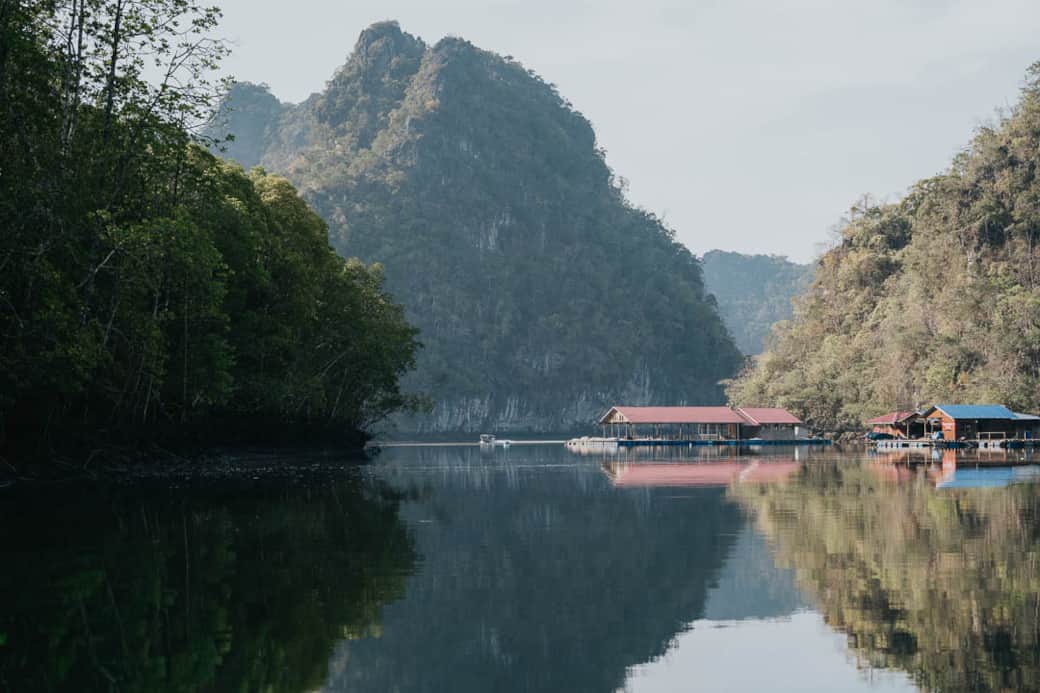
A MORE RESPONSIBLE MANGROVE EXPERIENCE
Observe the ecosystem, not a performance
A good mangrove visit is about the landscape as a whole - limestone cliffs, tidal forest, birdlife, reptiles and the changing water. Keep wildlife encounters natural, follow the guide's instructions and never feed animals for a closer photograph.
04. OPEN LANDSCAPE
Animals around Island Life
Not every animal encounter in Langkawi happens deep in the forest. Water buffalo in the paddy fields, Tokay geckos around homes and gardens, and stray cats and dogs are all part of the island’s everyday rhythm.
Water Buffalo
Water buffaloes belong to Langkawi's agricultural life rather than its wild fauna. They play a key role in the island’s agriculture, helping local farmers with land cultivation and providing milk for traditional dairy products.
WHERE TO SEE
Often seen in rural areas and paddy landscapes, cooling off in muddy ponds.
WOW NOTE
You can buy fresh buffalo mozzarella at 99 Island Cheese.

Tokay Gecko
A large, colourful gecko known for its loud "to-kay" call. The Tokay Gecko and other Geckos are important for the local ecosystem as they help control insect populations.
WHERE TO SEE AND BEST TIME
It may appear around trees, walls and buildings, especially after dark.
KEEP IN MIND
Observe rather than handle; they can bite when threatened.
Stray Animals
Stray dogs and cats are part of everyday island life. Local organisations like WOOFF provide feeding, sterilisation and medical care with support from the community.
WOW NOTE
Learn more on how you can support them thoughtfully, on our Give Back page.
05. HOW TO WATCH WILDLIFE RESPONSIBLY
A little distance changes everything
The most respectful wildlife encounters are often the quietest. These small choices help protect both animals and visitors while keeping sightings natural.
- DO NOT FEED WILDLIFE - Food changes animal behaviour and can encourage aggressive or dependent interactions.
- KEEP A RESPECTFUL DISTANCE - Use a zoom lens rather than moving closer, especially around young animals.
- MOVE QUIETLY - Lower voices and slow movements give wildlife space to continue normal behaviour.
- KEEP FOOD SECURED - Macaques quickly learn where snacks are kept. Close bags and never tease animals with food.
- AVOID FLASH AFTER DARK - Nocturnal animals such as colugos and geckos are best observed with minimal disturbance.
- DRIVE SLOWLY ON FOREST ROADS - Monkeys, reptiles and other animals may cross unexpectedly, particularly around dawn and dusk.
- NEVER BLOCK AN ESCAPE ROUTE - If an animal appears near your villa or path, give it room to leave on its own.
- LEAVE NESTING AREAS ALONE - Birds and other wildlife need more distance during breeding and nesting periods.
06. FOUR LANDSCAPES
Let the Habitat guide you
Langkawi’s wildlife changes with the landscape. From mountain forest and mangroves to mature rainforest and open paddy fields, each habitat reveals a different side of the island’s natural life. Choosing the right setting — and the right time of day — makes every encounter feel more natural and unhurried.
01. Forecast & Canopy
Dusky leaf monkeys, macaques, giant squirrels and hornbills.
02. Mangroves & Limestones
Eagles, macaques, monitor lizards, kingfishers and herons.
03. Mature Forecast
Colugos, Dusky leaf monkeys and hornbills.
04. Open Landscape
Water buffalo, egrets, herons and kingfishers.
07. Frequently Asked Questions
What animals can you see in Langkawi?
Common sightings can include macaques, dusky leaf monkeys, hornbills, eagles, monitor lizards, geckos and a range of forest and wetland birds.
Where is the best place to see wildlife in Langkawi?
Gunung Raya, Kilim Geoforest Park and the northwest rainforest are among the most useful areas to explore, depending on the habitat and time of day.
Are there monkeys in Langkawi?
Yes. Long-tailed macaques are common, while dusky leaf monkeys are quieter forest primates often seen in family groups.
Can you see hornbills in Langkawi?
Yes. Langkawi has three hornbill species: Oriental Pied, Great and Wreathed Hornbills.
Is wildlife in Langkawi dangerous?
Most animals avoid people when given space. The safest approach is to keep distance, avoid feeding, secure food and never corner wildlife.
When is the best time for wildlife watching?
Early morning and late afternoon are often productive for birds and forest activity; dusk is useful for nocturnal species such as colugos.
Let the island come to you
Wildlife encounters in Langkawi are often unplanned - a hornbill crossing above the pool, a dusky leaf monkey in the trees, or the call of a Tokay gecko after dark. A private villa gives you space to slow down and notice more of the island between each day out.